

I'm Reading "World Made by Hand"
THE LOST CENTER OF CIVILIZATION | EXTRA

“We have a tragic history of making tragic history, and then pretending it didn’t happen.”
— James Howard Kunstler
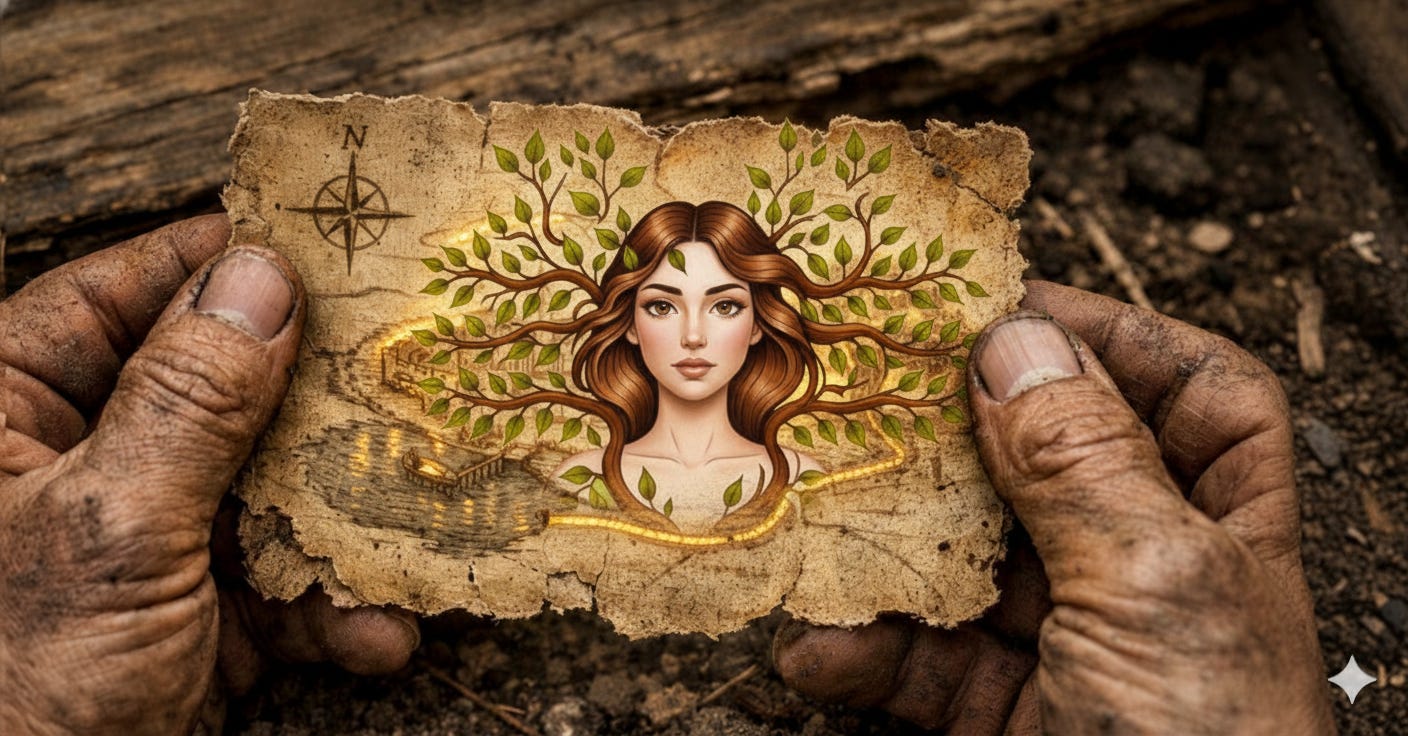
I’ve been reading Jim Kunstler’s World Made by Hand novels. For those who haven’t, they’re set in a not-too-distant future upstate New York after the total collapse of modern systems—peak oil, supply chains, federal government, the internet. The people in Union Grove are rebuilding a life from the ground up: farming, bartering, governing town meetings, and navigating the return of a pre-industrial, hands-on reality.
As I read, a strange sense of recognition settled in. Kunstler and I are talking about the same thing. We’re just starting from different elevations.
While he is on the ground, documenting the material and social collapse of a civilization that lost its way, I have been in the archives, tracing the psychological and spiritual collapse that made it inevitable. We are both mapping the same demise—he, topographically; I, thermographically.
His fiction is a detailed report from the world after the abstractions die. My work is an attempt to diagnose why those abstractions happened in the first place. But more importantly, we share the same conviction: that within this unflinching clarity lies the only real seed of renewal.
The Central Failure: The Left-Brain Takeover
Kunstler’s world collapses because it was built almost exclusively on the logic of one half of the human mind: the left hemisphere. The analytic, abstracting, systematizing, utility-obsessed part. This is the mind that creates global finance but forgets local community, that builds miraculous technology but severs our bond with nature, that promotes a sovereign, consuming Self and calls it freedom.
When the systems that mind built—the grid, the market, the state—shatter, his characters are forced to reactivate the other half: the right hemisphere. The part concerned with context, relation, metaphor, craft, and the immediate presence of things and people. They aren’t reading philosophy; they’re learning to read a neighbor’s need in their face, the truth of the soil, the weight of a shared silence.
This is the Great Reclamation. Not a return to primitivism, but a desperate, necessary reintegration.
Where This Connects to My Work and a Discovery
In my recent essays, I’ve called this left-brain dominion the Knowledge-Tree Empire. Writing is an emergent process, and this series led me to a discovery: a hidden narrative arc in the Bible, from Genesis to Revelation. It supports my thesis and tells another story: the birth of self-awareness and how one part of the human brain built a world that’s terminal. This story points to another path that was offered to us, and why. According to this narrative arc, we are now living in its final, globalized chapter: Babel 2.0. The unveil, The Drama You’re In, begins January 25, 2026.
Kunstler’s post-collapse world gives us a clear picture of what we might expect when this Babel 2.0 chapter is over. It brings us back to the right-brain core, which was previously buried underneath a Leviathan of left-brain logic. Religion returns not as doctrinal warfare, but as funeral rites that bind, harvest festivals that thank, and the hard, communal craft of making meaning together. The world is no longer hollow; it is filled again by the weight of a handshake, the truth of a season, the trust earned through shared labor.
If we take this path seriously, we might yet cultivate a civilization that is not terminal, but generative. A civilization that balances the power of the mind with the wisdom of the body, the analytical with the creative, the individual with the communal. This is the challenge, the adventure, and the hope that lies before us in the drama we are living—and the drama we are yet to write. No doubt, this is an extraordinary period of history. It seems we’re all, in our own ways, trying to remember how to make a world—and meaning—by hand.
If this dialogue between Kunstler’s fiction, ancient scripture, and the archaeology of our own consciousness resonated with you, you are welcome to support the ongoing work. Your contributions directly sustain the slow thinking and writing this project requires. You can do so via Patreon, BuyMeACoffee, or a paid subscription here on Substack.
I cannot recommend this four book series highly enough. I try to avoid suggesting to friends what I think they should read…..except in this case, and I’ve even gifted it to several. As usual, I hope that readers are paying attention to your observations and sharing them. Many thanks for this and I’ll add a plug for my second favorite Substack: James Kunstler’s.
I've gifted these books several times - they're that well written. Kunstler's a wordsmith with a story to tell. Great reads.