


After my dream yesterday morning—the one with the alligator and the caramel popcorn—I did my usual routine: water with apple cider vinegar, sea salt, lemon juice, and a couple of coffees. Then something else came to me.
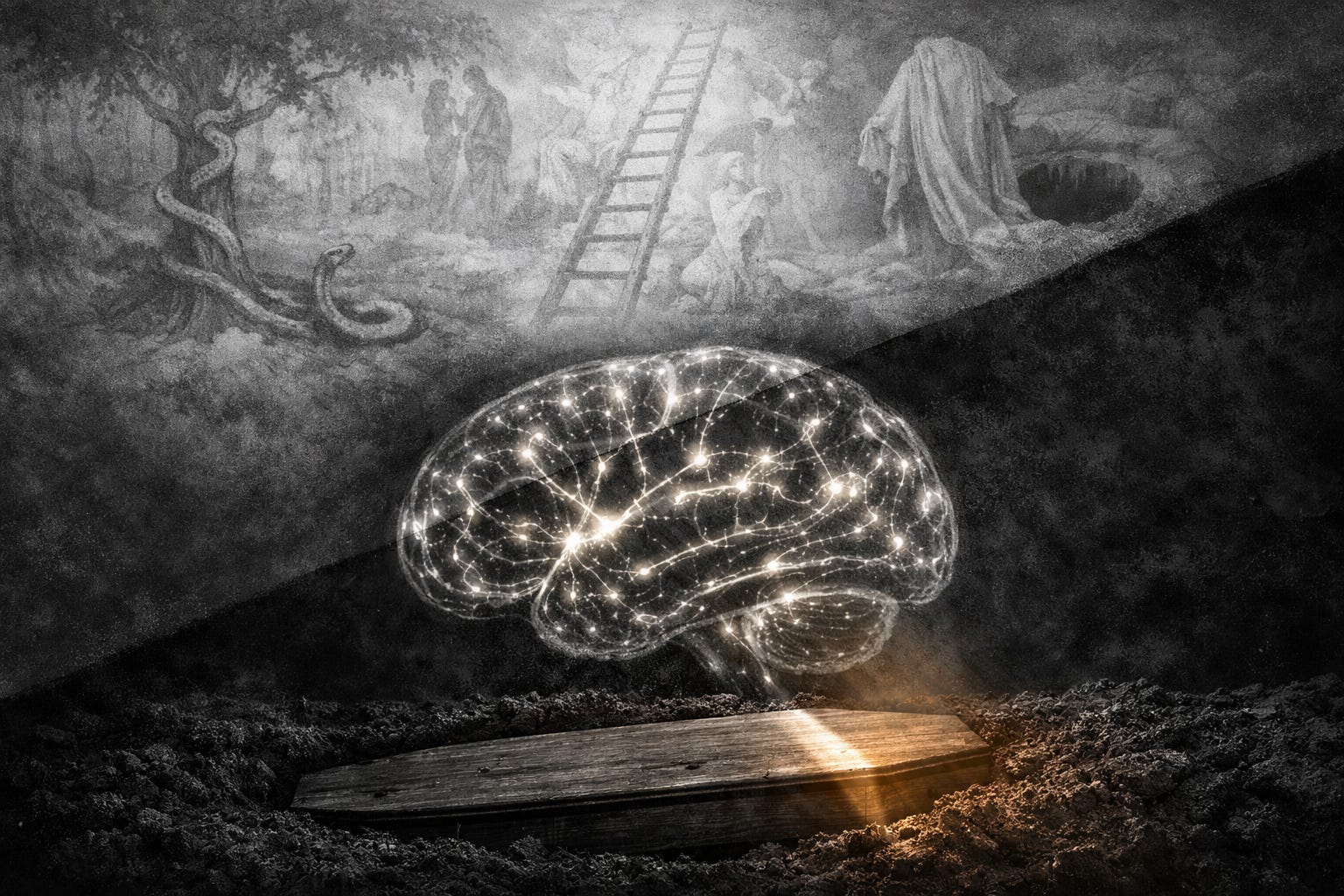
The left brain processes language, sequence, logic. The right brain processes wholes, patterns, symbols, images. When you read a story linearly—"first this, then this, then this"—you’re engaging the left brain. You’re following a map someone else made.
But when you take a story and translate it back into pure image, something else happens. You’re giving the right brain raw material to work with. You’re bypassing interpretation and entering experience.
The Bible is not a history book. It never was. It’s a library of dreams—dreams that a whole culture dreamed together over centuries. Adam and Eve. The garden. The serpent. The flood. The tower. The burning bush. The parting sea. The manger. The cross. The empty tomb.
These are not just stories. They are the archetypal images that have shaped Western consciousness for two thousand years. Love them or hate them, they’re in the water supply.
I wondered: if you took each one and sat with it as pure image—not as doctrine, not as history, not as moral lesson, but as raw symbol—and then laid them side by side like a series of paintings, what patterns would emerge?
The Renaissance painters already did this, of course. They didn’t illustrate the Bible. They imagined it. They painted what the text looked like in their own minds, in their own time, with their own faces, their own light.
Caravaggio put dirty feet and ordinary people into sacred scenes. He painted the Bible as if it happened last Tuesday in Rome. He wasn’t writing theology. He was seeing.
So I thought: let’s reverse-engineer the process. Strip Genesis down to its core images and see what the right brain does with them.
Genesis in One Word Per Image
I went through the whole book, chapter by chapter, and pulled out one image per moment. Just the picture. No interpretation. No theology. Just what the mind’s eye sees.
Here’s what that looks like, in chronological order:
Darkness / Water / Wind / Light / Sky / Land / Seeds / Trees / Sun / Moon / Stars / Sea Monsters / Birds / Beasts / Dust / Breath / Garden / Rib / Woman / Naked / Serpent / Fruit / Eyes / Fig Leaves / Hiding / Voice / Curse / Tunics / Sword / Cain / Abel / Field / Blood / Mark / Wanderer / Generations / Enoch / Ark / Flood / Rain / Mountains / Raven / Dove / Olive Leaf / Altar / Rainbow / Vineyard / Wine / Ham / Tent / Canaan / Babel / Tower / Language / Ur / Stars / Covenant / Hagar / Well / Angel / Ishmael / Circumcision / Oaks / Visitors / Sarah / Laughter / Sodom / Angels / Lot / Salt / Fire / Smoke / Cave / Moab / Ammon / Gerar / Dream / Abimelech / Isaac / Weaning / Hagar / Wilderness / Bow / Beersheba / Moriah / Donkey / Wood / Fire / Knife / Ram / Thicket / Machpelah / Cave / Sarah / Servant / Camel / Rebekah / Ring / Bracelets / Well / Veil / Field / Esau / Jacob / Stew / Birthright / Wells / Gerar / Abimelech / Blessing / Hairy / Goatskins / Deception / Blessing / Cry / Haran / Ladder / Angels / Stone / Pillar / Oil / Bethel / Rachel / Well / Stone / Shepherd / Laban / Leah / Eyes / Mandrakes / Bilhah / Zilpah / Dan / Naphtali / Gad / Asher / Reuben / Mandrakes / Issachar / Zebulun / Dinah / Joseph / Rods / Flocks / Dream / Return / Household Gods / Gilead / Heap / Mizpah / Wrestling / Peniel / Hip / Sword / Esau / Embrace / Shechem / Dinah / Sword / Bethel / Deborah / Rachel / Benjamin / Reuben / Bilhah / Twelve / Joseph / Robe / Dreams / Sheaves / Stars / Pit / Ishmaelites / Silver / Goat / Blood / Tamar / Veil / Signet / Staff / Perez / Potiphar / Prison / Cupbearer / Baker / Vine / Baskets / Birds / Forget / Pharaoh / Cows / Ears / Ring / Chariot / Grain / Famine / Sons / Bowing / Simeon / Sacks / Money / Benjamin / Cup / Judah / Plea / Joseph / Weeping / Wagons / Goshen / Jacob / Blessing / Pharaoh / Famine / Land / Seed / Ephraim / Manasseh / Hands / Cross / Blessings / Death / Coffin
That’s 200 images. A flipbook of the collective unconscious.
The Pattern Emerges
When you step back, the images sort themselves into phases:
Phase 1: Primordial Images
Darkness, Water, Wind, Light, Sky, Land, Seeds, Trees, Sun, Moon, Stars
These are the raw materials of reality. They exist before story. They are the stage.
Phase 2: Relationship Enters
Breath, Garden, Rib, Woman, Naked, Serpent, Fruit, Eyes, Hiding, Voice
Now we have actors. Tension. Choice.
Phase 3: Consequences
Tunics, Sword, Cain, Abel, Field, Blood, Mark, Wanderer
Actions have outcomes. Violence enters. The pattern establishes itself.
Phase 4: The Collective
Ark, Flood, Rain, Mountains, Raven, Dove, Olive Leaf, Altar, Rainbow
Now the story involves all of humanity. The scale expands.
Phase 5: Named Individuals
Abram, Sarai, Hagar, Ishmael, Isaac, Rebekah, Jacob, Esau, Rachel, Leah
Now we have proper names. Identity becomes specific. Not just “man” but this man.
Phase 6: Covenant Words
Circumcision, Covenant, Blessing, Birthright, Oath, Inheritance
These words only make sense inside the story. They are agreements. They bind.
Phase 7: Encounters
Dream, Ladder, Angels, Wrestling, Peniel, Face, Vision
God and man meet in specific moments. Turning points.
Phase 8: Objects That Carry Story
Robe, Pit, Silver, Cup, Sacks, Money, Ring, Chariot, Wagons, Staff, Signet
These are not just things. They are plot. The robe means favor. The pit means betrayal. The cup means test. The ring means authority.
Phase 9: Emotional Words
Weeping, Fear, Laughter, Grief, Joy, Comfort, Forgiveness
The inner landscape. The feelings the story exists to contain.
Phase 10: The Final Words
Blessing, Death, Coffin
Joseph
Now look at Joseph. He’s not just a character. He’s the sum of every image that came before him.
He contains Abraham’s faith, Isaac’s near-sacrifice, Jacob’s wrestling, Rachel’s tears, the brothers’ betrayal, the pit, the prison, the dreams, the interpretation, the forgiveness, the recognition that evil and good can be woven into a single fabric.
He is the first complete self in the book. Not just a person, but a person who has integrated everything—the light and the dark, the suffering and the exaltation, the betrayal and the reconciliation. In Jungian terms, he’s an image of the Self: the totality of the psyche, the union of opposites.
And then he ends in a coffin.
Why the Coffin?
For Jung, the coffin is not an ending. It’s a container.
A coffin holds what is precious. It preserves. It waits. It is a vessel for transformation.
Joseph in the coffin is the Self withdrawn from the world, held in suspension, waiting to be carried forward. His bones do not decay. They are kept. They will travel with the people. They will enter the promised land. They will be buried at Shechem, where the story first began with a promise.
This is the paradox: the fully realized self must be carried by others. Joseph cannot walk into the promised land. His work is done. Now the community carries him.
The coffin is the unconscious itself—the container that holds what is not yet integrated by the collective. Joseph’s bones are the treasure hard to attain. The accumulated wisdom of the patriarchs, buried, waiting to be resurrected at the right time. The Israelites carry this coffin through the wilderness for forty years. It is always with them, always present, always waiting.
This is how the unconscious works. The Self, once realized, does not disappear. It sinks into the depths and becomes a container for meaning that the conscious mind can draw upon. Joseph in the coffin is the Self in potentia—fully formed, but hidden, waiting for the next stage.
Why Genesis Ends Here
Why not with Joshua entering the land? Why not with the fulfillment?
Because psychologically, the Self is never finally realized in this life. It is always both achieved and awaited. Both present and hidden. Both alive and in a coffin.
Joseph suffered, forgave, reconciled, and saw that the evil his brothers intended and the good that came from it were not contradictions but a single fabric—two truths held together. He became whole. And then he died, and his body was placed in a box.
This is not failure. This is the pattern: integration leads to containment. The work of a lifetime is gathered up, held, and passed on. The next generation carries it without fully understanding it. The bones wait.
The Pattern in Miniature
The story moves from:
What is (primordial reality)
→ Who is (named individuals)
→ What binds (covenant)
→ What happens (encounters, objects, emotions)
→ What remains (promise, even in death)
The early words (Water, Light, Land) are universal. Anyone would understand them.
The middle words (Covenant, Birthright, Blessing) are particular. You have to know the story to know what they mean.
The late words (Coffin, and the unspoken promise) point forward. They are incomplete without what comes next.
My Dream Had the Same Structure
I had primordial images: Pool, Alligator, Dog, Light, Night, Smell.
I had named people: the Catholic-Jewish couple, the Mexican-American couple.
I had objects that carry story: Camera, Caramel Popcorn.
I had emotional words: Fear, Relief, Horror, Resolution.
I had the word that only makes sense inside my story: Belonging.
The pattern holds. This is how psyche works. It builds meaning the same way every time: from the universal to the particular, from the image to the story, from the raw to the woven.
“In the beginning was the Word.” But before the Word could name anything, there had to be something to name. So first came Water. First came Light. First came Eyes to see.
Then came the rest.
Only YOU Wendy, could break it down like this. Masterful dissection and threading together.
The coffin representing our “Self in potentia” is the perfect perspective to see it as preparation…the lying-in-wait for what’s next. I feel like we are “Readers in potentia” as we anticipate your next published works😉🙌
P.S. Love morning water protocol. Glad you’re taking good care of yourself💯
Wendy, thank you again for your mastery. You have described in your words maturation and evolving of self awareness….you are “belonging” in the collective.